|
Mass Times
Weekdays at 8:00 a.m. Monday, Wednesday, Thursday & Friday (No Mass on Tuesdays) Saturday Vigil at 4:30 p.m. Sundays at 9:00 a.m. & 11:00 a.m. Confessions on Saturday 3:45 - 4:15 p.m. or call the office for an appointment |
Office Hours Mondays, Wednesdays, Thursdays and Fridays 10:00 a.m. - 3:00 p.m. Closed on Tuesdays & Weekends and Statutory holidays |
✝️ STATIONS OF THE CROSS ✝️
Every Friday evening at 7:00 p.m. in the Church until Friday, March 27th - (except for Friday, March 20th - when there will be a Passion Play performed by our Youth Group at 7:00 p.m.
🍀 ST. PATRICK’S WEEKEND CELEBRATION🍀
Join us as we celebrate St. Patrick’s Weekend on March 14–15! The celebration will take place here
Your generosity and support mean so much to our youth ministry! Thank you for helping us build a strong and faith-filled community. 💚
Join us as we celebrate St. Patrick’s Weekend on March 14–15! The celebration will take place here
- Saturday after the 4:30 p.m. Vigil Mass
- Sunday after both Masses (9:00 a.m. and 11:00 a.m.)
Your generosity and support mean so much to our youth ministry! Thank you for helping us build a strong and faith-filled community. 💚
PRAYING WITH THE SACRED SCRIPTURES - An introduction to Lectio Divina
On Thursday, March 26th, at 7:00 pm in the Church hall, Fr. Michael will share with us an ancient method of praying with the Bible, called Lectio Divina (Sacred Reading). Besides outlining the origins and methods of this prayer, attendees will have the opportunity to learn how to practice Lectio Divina, by working with one of the readings for the Palm Sunday masses. All are invited to attend. Fr. Michael expects that the evening will finish by 8:30 pm.
- St. Ambrose Parish is offering our parishioners free registration to FORMED
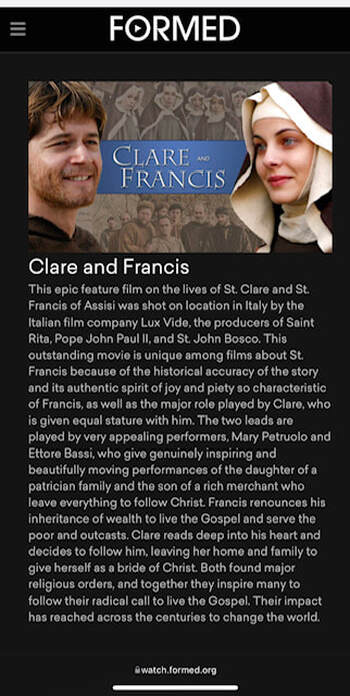
FORMED has many documentaries, movies, books, audios and much more. There are also many movies for children and family. Below are a few examples of movies on FORMED, including interviews on dozens of the lives of the saints and our parish Patron, St. Ambrose. They also offer Bible Studies, Devotionals, Spirituality and Daily Reflections.
To register please visit: www.stambroseparish.formed.org
Enter Parish postal code (M8W 3W2) parish name will appear, then click St. Ambrose & create an account using your email
Feast Day – December 7th
Aurelius Ambrosius, better known in English as Saint Ambrose (c. 340 – 4 April 397), was an archbishop of Milan who became one of the most influential ecclesiastical figures of the 4th century. He was consular prefect of Liguria and Emilia, headquartered in Milan, before being made bishop of Milan by popular acclamation in 374. Ambrose was a staunch opponent of Arianism, and has been accused of fostering persecutions both of them and of Jews and pagans. Traditionally, Ambrose is credited with promoting "antiphonal chant", a style of chanting in which one side of the choir responds alternately to the other, as well as with composing Veni redemptor gentium, a Christmas hymn.
Ambrose was one of the four original doctors of the Church, and is the patron saint of Milan. He is notable for his influence on St. Augustine. Ambrose was born into a Roman Christian family about 340 AD and was raised in Trier.[2] His father was Aurelius Ambrosius, the praetorian prefect of Gaul his mother was a woman of intellect and piety. Ambrose's siblings, Satyrus (who is the subject of Ambrose's De excessu fratris Satyri) and Marcellina, are also venerated as saints. There is a legend that as an infant, a swarm of bees settled on his face while he lay in his cradle, leaving behind a drop of honey. His father considered this a sign of his future eloquence and honeyed tongue. For this reason, bees and beehives often appear in the saint's symbology.
After the early death of his father, Ambrose followed his father's career. He was educated in Rome, studying literature, law, and rhetoric.[6] Praetorian prefect Probus first gave him a place in the council and then in about 372 made him consular prefect or "Governor" of Liguria and Emilia, with headquarters at Milan, which was then (beside Rome) the second capital in Italy.
Ambrose was the Governor of Aemilia-Liguria in northern Italy until 374 when he became the Bishop of Milan. He was a very popular political figure, and since he was the Governor in the effective capital in the Roman West, he was a recognizable figure in the court of the Emperor Valentinian I. Ambrose never married. Soon after acquiring the undisputed possession of the Roman empire, Theodosius died at Milan in 395, and two years later (April 4, 397) Ambrose also died. He was succeeded as bishop of Milan by Simplician. Ambrose's body may still be viewed in the church of S. Ambrogio in Milan, where it has been continuously venerated — along with the bodies identified in his time as being those of Sts. Gervase and Protase.
Many circumstances in the history of Ambrose are characteristic of the general spirit of the times. The chief causes of his victory over his opponents were his great popularity and the reverence paid to the episcopal character at that period. But it must also be noted that he used several indirect means to obtain and support his authority with the people. He was generous to the poor; it was his custom to comment severely in his preaching on the public characters of his times; and he introduced popular reforms in the order and manner of public worship. It is alleged, too, that at a time when the influence of Ambrose required vigorous support, he was admonished in a dream to search for, and found under the pavement of the church, the remains of two martyrs, Gervasius and Protasius. The saints, although they would have had to have been hundreds of years old, looked as if they had just died. The applause of the people was mingled with the derision of the court party. St. Ambrose Pray for us ......... Ora pro nobis
Aurelius Ambrosius, better known in English as Saint Ambrose (c. 340 – 4 April 397), was an archbishop of Milan who became one of the most influential ecclesiastical figures of the 4th century. He was consular prefect of Liguria and Emilia, headquartered in Milan, before being made bishop of Milan by popular acclamation in 374. Ambrose was a staunch opponent of Arianism, and has been accused of fostering persecutions both of them and of Jews and pagans. Traditionally, Ambrose is credited with promoting "antiphonal chant", a style of chanting in which one side of the choir responds alternately to the other, as well as with composing Veni redemptor gentium, a Christmas hymn.
Ambrose was one of the four original doctors of the Church, and is the patron saint of Milan. He is notable for his influence on St. Augustine. Ambrose was born into a Roman Christian family about 340 AD and was raised in Trier.[2] His father was Aurelius Ambrosius, the praetorian prefect of Gaul his mother was a woman of intellect and piety. Ambrose's siblings, Satyrus (who is the subject of Ambrose's De excessu fratris Satyri) and Marcellina, are also venerated as saints. There is a legend that as an infant, a swarm of bees settled on his face while he lay in his cradle, leaving behind a drop of honey. His father considered this a sign of his future eloquence and honeyed tongue. For this reason, bees and beehives often appear in the saint's symbology.
After the early death of his father, Ambrose followed his father's career. He was educated in Rome, studying literature, law, and rhetoric.[6] Praetorian prefect Probus first gave him a place in the council and then in about 372 made him consular prefect or "Governor" of Liguria and Emilia, with headquarters at Milan, which was then (beside Rome) the second capital in Italy.
Ambrose was the Governor of Aemilia-Liguria in northern Italy until 374 when he became the Bishop of Milan. He was a very popular political figure, and since he was the Governor in the effective capital in the Roman West, he was a recognizable figure in the court of the Emperor Valentinian I. Ambrose never married. Soon after acquiring the undisputed possession of the Roman empire, Theodosius died at Milan in 395, and two years later (April 4, 397) Ambrose also died. He was succeeded as bishop of Milan by Simplician. Ambrose's body may still be viewed in the church of S. Ambrogio in Milan, where it has been continuously venerated — along with the bodies identified in his time as being those of Sts. Gervase and Protase.
Many circumstances in the history of Ambrose are characteristic of the general spirit of the times. The chief causes of his victory over his opponents were his great popularity and the reverence paid to the episcopal character at that period. But it must also be noted that he used several indirect means to obtain and support his authority with the people. He was generous to the poor; it was his custom to comment severely in his preaching on the public characters of his times; and he introduced popular reforms in the order and manner of public worship. It is alleged, too, that at a time when the influence of Ambrose required vigorous support, he was admonished in a dream to search for, and found under the pavement of the church, the remains of two martyrs, Gervasius and Protasius. The saints, although they would have had to have been hundreds of years old, looked as if they had just died. The applause of the people was mingled with the derision of the court party. St. Ambrose Pray for us ......... Ora pro nobis
Proudly powered by Weebly